
"coffee in Central America"
5000 article(s) found
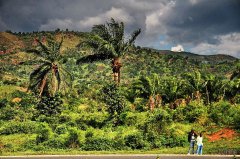
Nicaragua SHG boutique coffee beans the most classic flavor of coffee from Matagalpa, Central America.
Like most Central American coffee-producing countries, Nicaragua grows very well, with most high-end coffee beans coming from high-altitude estates, and these beans represent SHG grade (Strictly High Grown). Most of Nicaragua grows traditional coffee varieties, such as Tibica, bourbon, National Treasure Coffee, etc., as well as some Caturra coffee trees.

Characteristics of coffee beans from three regions-Characteristics of coffee beans from Central and South America
Characteristics of coffee beans from three regions-Characteristics of coffee beans from Central and South America Arabica Arabica beans, world-famous blue mountain coffee, mocha coffee, etc., almost all Arabica species. Appearance: bean shape smaller, positive was long oval, narrow and tortuous cracks in the middle, beans back arc shape more flat, consistent size, uniform color luster. Origin: Arabica coffee

Costa Rica, the first country in Central America to grow coffee, grows youdao.
For more information on coffee beans, follow the Coffee Workshop (official Wechat account cafe_style), the first country in Central America to grow coffee; government support for development began in Costa Rica in 1729, when it was introduced from Cuba. This made Costa Rica the first country in Central America to grow coffee and the first to grow coffee because of its commercial value.

The secret of the long-term success of the St. Vincent processing plant in Honduras, the first largest coffee producer in Central America.
Professional barista exchanges please follow the coffee workshop (Wechat official account cafe_style) St. Vincent processing plant (Beneficio San Vicente) one of the ancient classic processing plants in Honduras St. Vincent (San Vicente) is a family-run processing plant, very famous locally, St. Vincent processing plant as the gatekeeper, to improve the quality of coffee beans! Provide technological upgrading for producers

Flavor and taste characteristics of Honduran coffee beans, the most popular coffee brand in Central and South America
What makes coffee in Honduras special? You know, there are countless excellent coffees in Central and South America. Why do Colombian coffee and Brazilian coffee stand out from the crowd? Let's take a look at the uniqueness of Honduran coffee on Qianjie today. The most luxuriant and purest coffee growing place in the region: unfortunately, the United States

Boutique coffee beans growing at Linna Manor in Nicaragua, one of the poorest countries in Central America.
Among them, in Costa Rica, where the government strictly controls the use of water, coffee farmers have created honey treatments named to retain different thicknesses of flesh, including yellow honey and red honey, the thinnest layers of flesh, and black honey, the famous owner of the former Costa Rican COE champion La Brumas de Zurqui. Traditionally, Nicaragua is

Madagerba Coffee Region Nicaragua Coffee Flavor Characteristics
Professional coffee knowledge exchange More coffee bean information Please pay attention to coffee workshop (Weixin Official Accounts cafe_style) Front Street-Nicaragua Coffee Introduction Central America is a land bridge connecting North and South America. There are seven countries, namely Belize, Costa Rica, El Salvador, Guatemala, Honduras, Nicaragua and Panama. Coffee is produced in seven Central American countries, including melons.

Stories about the characteristics of well-known Central American coffee producing areas
Well-known representative coffee: Tarrazu Costa Rica, like other Central American countries, widely grows Arabica coffee. Its coffee is mainly grown in two high areas, one is the high area near the capital San Jose, and the other is the Tarrazu mountains southeast of San Jose. Because coffee is grown in Costa Rica at high altitudes.

Boutique Coffee Bean Variety growing Market at Manor Lina, Nicaragua, one of the poorest countries in Central America
The excellent Nicaraguan coffee is among the highest in the world, it is mild and delicious, moderate granule, very fragrant. In many countries, coffee production has been seriously affected for political reasons. Nicaraguan coffee industry is no exception. The 1979 revolution forced coffee planters to flee to Miami. It was followed by a period of uncertainty, and the government considered whether to re-divide it.

History of fine coffee beans in Martinique, the birthplace of coffee beans in Central America
For professional baristas, follow the coffee workshop (Wechat official account cafe_style) Martinique, the cradle of American coffee. Martinique is a small island and the birthplace of Central American coffee, but it produces very little coffee today. The first coffee tree in the Western Hemisphere was created by Gabriel Mathieu de Clieu in the early 1820s.

Introduction to the History of Coffee in Martinique, the birthplace of Coffee in Central America
Professional baristas follow the coffee workshop (Wechat official account cafe_style) Martinique is a small island and the birthplace of coffee in Central America, but it produces very little coffee today. The first coffee tree in the Western Hemisphere was brought from France by Gabriel Mathieu de Clieu in the early 1820s. Good morning, Dirkley.

The birthplace of coffee in Martinique and Central America.
Martinique is a small island and the birthplace of coffee in Central America, but it produces very little coffee today. The first coffee tree in the Western Hemisphere was brought from France by Gabriel Mathieu de Clieu in the early 1820s. In his early years, Dirkley was a naval officer in Martinique. He brought back a coffee tree and planted it in Pritchell.

Boutique coffee beans Central America Nicaraguan coffee beans
Nicaragua is located in central Central America, bordered by the Pacific Ocean to the west and the Caribbean Sea to the east. The highlands in the north and the coastal plains in the east are part of the Central American volcanic belt. The eastern plain is high-temperature and rainy, with a tropical maritime climate. The suitable climate provides an excellent growth environment for the cultivation of coffee. (Pakamara, Nicaragua on the left, Guatemala on the right) High-quality Niagara
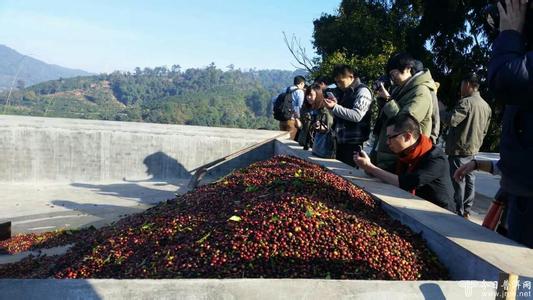
Coffee cultivation at Manor Lina, Nicaragua, one of the poorest countries in Central America
Nicaragua is an economically backward agricultural country, is one of the poorest countries in Central America, the unemployment rate is very high, people live in poverty, and coffee is Nicaragua's pillar industry, producing nearly 100,000 tons of coffee beans every year. Due to the poor economic foundation, the coffee industry is still relatively backward, and coffee farmers are also in a relatively poor state. Some of the fruits that stand out from the classifier will
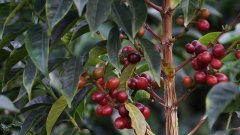
The only coffee without sharp acidity in Central America. Nicaraguan coffee.
Nicaragua (Nicaragua) aroma 3.5 minutes brightness 4 mellow flavor 4 points aftertaste 4 points suitable for baking: people who like deep-baked taste of City/Full city can try Jinotega and Matagalpa, baking the second burst when the beans are dense, the flavor is thick but well balanced, with a strong bitter sweetness

Introduction to Honduran coffee beans located in northern Central America San Juan Cido San Barra Estate
Honduras is a mountainous country in Central and North America with a population of more than 8.3 million and an area of about 112,000 square kilometers. Located in northern Central America. It is bordered by the Caribbean Sea to the north, the Gulf of Fonseca in the Pacific Ocean to the south, Nicaragua and El Salvador to the east and south, and Guatemala to the west. More than three-quarters of the territory is mountainous and plateau. Mountains extend from west to east, inland for lava plateau, mountainous

Introduction to Panamanian Coffee, the King of Coffee Price ratio in Central America
Panama Coffee, the king of coffee price in Central America, has been among the best coffee producers in the world since three years ago, surprising countries that have been in the vanguard of developer production for many years. Panamanian coffee is mainly produced in the west near the Costa Rican border, producing the best washed coffee. Compared with coffee beans grown at low and middle elevations

Introduction of Nicaraguan Coffee Flavor in Central America lemon tree manor in Nicaraguan coffee producing area
In many countries, coffee production will be seriously affected for political reasons. Nicaraguan coffee industry is no exception. The 1979 revolution forced coffee planters to flee to Miami. A period of indecision followed, when the government considered whether to redistribute land (including many plantations), which led to a shortage of coffee and a decline in production, up from 1 in the early 1970s.

Central America's poorest coffee-producing country (Nicaragua)-Matagalpa
Nicaragua is an economically backward agricultural country and one of the poorest countries in Central America. The unemployment rate is very high and the people live in poverty. Coffee is the pillar industry of Nicaragua, producing nearly 100,000 tons of coffee beans every year. Because of the poor economic base, the coffee industry is still relatively backward, and coffee farmers are also in a relatively poor state. Although Nicaragua is a Central American country with a large territory

A brief introduction to the treatment method of Grinding degree and Baking degree of Fine Coffee beans in Los Congo Manor in Central America
Beautiful sour taste, moderate mellow Nicaraguan coffee belongs to the Central and South American style coffee, although the acidity is not very high, but it feels refreshing. The mellow degree is also not high, but the overall feeling is just right, neither thin nor too strong. To make it easier to accept. The taste of red wine can be vaguely felt in the shallow sour taste, which is also a major feature of Nicaraguan coffee.